|
Speakers
Dr
Arcot Ramachandran
Chairman, TERI
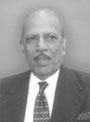 Dr
Arcot Ramachandran, after a brilliant academic career in Madras
University, India, joined Purdue University in the United States
of America where he obtained a Master's degree and Ph.D. in
Mechanical Engineering. On return to India, he joined the newly
established graduate programme in mechanical engineering at
the Indian Institute of Science, Bangalore, as the first faculty
member. During the period 1957-1967, he was Head of the Departments
of Mechanical Engineering and Industrial Management and established
a number of graduate programmes in mechanical engineering and
industrial management. He established a School of Research in
Energy, Heat and Mass Transfer, which attracted a number of
scholars and visiting professors. In 1967 he was invited to
become the Director of the Indian Institute of Technology, Madras,
one of the higher Institute of technology established. During
the period 1967-1973, he established Schools of Heat Transfer
and of Energy Research and also made the I.I.T., Madras, a center
of excellence for graduate studies and research in science and
engineering. He founded the Indian Society of Heat and Mass
Transfer of which he was the founder president. Later he organized
the Regional Centre for Energy, Heat and Mass Transfer for Asia
and the Pacific. Dr
Arcot Ramachandran, after a brilliant academic career in Madras
University, India, joined Purdue University in the United States
of America where he obtained a Master's degree and Ph.D. in
Mechanical Engineering. On return to India, he joined the newly
established graduate programme in mechanical engineering at
the Indian Institute of Science, Bangalore, as the first faculty
member. During the period 1957-1967, he was Head of the Departments
of Mechanical Engineering and Industrial Management and established
a number of graduate programmes in mechanical engineering and
industrial management. He established a School of Research in
Energy, Heat and Mass Transfer, which attracted a number of
scholars and visiting professors. In 1967 he was invited to
become the Director of the Indian Institute of Technology, Madras,
one of the higher Institute of technology established. During
the period 1967-1973, he established Schools of Heat Transfer
and of Energy Research and also made the I.I.T., Madras, a center
of excellence for graduate studies and research in science and
engineering. He founded the Indian Society of Heat and Mass
Transfer of which he was the founder president. Later he organized
the Regional Centre for Energy, Heat and Mass Transfer for Asia
and the Pacific.
To acknowledge his immense contribution,
he has been awarded the Padma Bhushan-one of India's highest
civilian awards that recognizes distinguished service of a high
order to the nation in any field (January 2003).
His achievements attracted the
attention of international organizations and the national Government.
In 1973, he was invited to assume the position of Secretary
to the Government of India in the newly established Department
of Science and Technology and was later concurrently the Director-General
of the Council of Scientific and Industrial Research. The Department
is responsible for the planning and direction of Research and
Development in science, technology and environment through a
network of research laboratories, academic institutions and
industry, in both the private and public sectors. During his
tenure as Secretary, Science and technology Agency, the Environment
Planning, Co-ordination and Research Programme, the Science
and Engineering Research Council, a New Energy Sources Research
and Development Programme, the National Information System for
Science and technology (NISSAT) and Central Electronics Limited,
an industrial undertaking for manufacturing ferrites, opto-electronic
instruments and solar cells.
He has played a significant role
in engineering education at the undergraduate and graduate levels
as chairman or member of various Boards. He was chairman of
the Preparatory Committee for the United Nations Conference
on Science and Technology for Development (1977-1978). He was
also chairman of the UNESCO Expert Group Meeting on Engineering
Education, the UNESCO International Conference on Education
and Training for Engineers and Technicians, the Association
for Engineering Education in South and Central Asia, the UNESCO
Expert Group on Environmental Aspects of Engineering Education,
and the ESCAP Expert Meeting on the Regional Centre for Transfer
of Technology. Based on the recommendation of this group, the
U.N. ESCAP Regional Centre for Transfer of Technology was established
in Bangalore, India, in July 1977.
In October 1978, he was appointed
by the Secretary-General of the United Nations as Under Secretary-General
and Executive Director of the newly established United Nations
Centre for Human Settlements (Habitat) with its global headquarters
in Nairobi. The Centre rendered technical assistance to 106
countries in Africa, Asia and the Pacific, West Asia, Latin
America and the Caribbean, besides conducting research and training
programmes in collaboration with the World Bank, universities
and institutions in Europe, the united States of America, Canada,
Latin America, the Caribbean, Africa and Asia. It established
audio-visual information centers in Amman, Bangkok, Budapest,
Mexico City and Toronto. He was also Administrator of the United
Nations Habitat and Human Settlements Foundation (a voluntary
fund for contributions by Governments, foundations and aid agencies).
During his tenure as Executive Director of UNCHS (Habitat),
the United Nations Commission on Human Settlements and the UN
General Assembly approved his initiatives viz. Observance of
the World Habitat Day on the first Monday of October; the 1987
International Year of Shelter for the Homeless; and the Global
Strategy for Shelter to the year 2000 with the Goal of Adequate
Shelter for All. In 1990 he launched the Sustainable Cities
Programme in 12 cities around the world. In 1992, the brown
Agenda, viz. Sustainable Human Settlements Developments was
included in the UNCED plan of Action at the Rio Earth Summit.
He retired from the U. N. in 1993.
Since 1994, he is Chairman, Advisory
Committees of the Ministry of Non-conventional Energy Sources,
the Department of Ocean Development urban physical planning
system and Housing set up by the Planning Commission and the
Ministry of Urban Affairs of the Government of India.
He is associated with organizations
dealing with Energy, Environment. Human Settlements, Infrastructure
development etc. He is President Solar Energy Society of India.
He was conferred Honorary Doctorates
by Purdue University, Stuttgart University (Federal Republic
of Germany), University of Roorkee, Andhra University, J. N.
Technological University, Anna University, I.I.T. (Madras),
Venice (Italy) and honorary fellowship of the Indian Institute
of Science. The Institution of Engineers (India) elected him
as Honorary Life Fellow of the Institution.
He was awarded the 1986 Heat Transfer
Memorial Award by the American Society of Mechanical Engineers
at Anaheim, California, in December 1986 and is the recipient
of a number of other awards. He is a Fellow of the American
Society of Mechanical Engineers, the Institution of Mechanical
Engineer, the Indian National Science Academy, the Indian Academy
of Sciences, and the Indian National Academy of Engineering.
He is a member of the editorial board of several technical journals.
He has delivered invited lectures in many countries on a variety
of topics such as environment, Human settlements, Resources
management, Renewable energy sources, Engineering education,
Information systems Science and Technology for development etc.
The Building and Social Housing
Foundation of U.K. presented the World Habitat Trophy on 19
February 1995 at Windsor Castle, England, 'in grateful recognition
and appreciation of his invaluable work at UNCHS which has brought
new hope and new life to millions of homeless families around
the world'.
Sir S S Bhatnagar Gold medal award
for Science and Technology - January 3 1998 presented by the
Prime Minister on the occasion of the Golden Jubilee Year by
the Indian Science Congress at Hyderabad.
Chairman, International Jury set up by UNCHS (Habitat) and the
United Arab Emirates, Dubai Municipality for 'Best Practices
in improving the Living Environment' to be presented on World
Habitat Day, October 1998.
Keynote Address at the International
Conference on 'Metropolitan Concentrations of knowledge based
industries, Ottawa, Canada, September 1997.
CHEC-UNCHS Common wealth Heads
of Govts meeting forum-Keynote address 'Sustainable communities
through partnership'-Edinburgh, Scotland, October 1997
'Science and Technology for Sustainable
Development' Maharashtra Association for the cultivation of
Science, Pune, 1998.
President, National Institute of
Urban Affairs, New Delhi.
Chairman, Governing Council, Tata
Energy Research Institute, New Delhi.
Chairman, Science and Technology
Advisory Committee for SSS-Nire, M.N.E.S., Government of India.
Hon. Visiting Professor, National
Institute of Advanced Studies, Bangalore.
Chairman, Engineering Staff College
of India, Hyderabad.
Lifetime contribution Award in
Engineering for the year 1999 by the Indian National Academy
of Engineering, February 2000.
|



